Iron(III) chloride 40% or polyaluminum chloride (PAC)? A practical comparison for coagulant selection
By فريق Egy Chem Hub
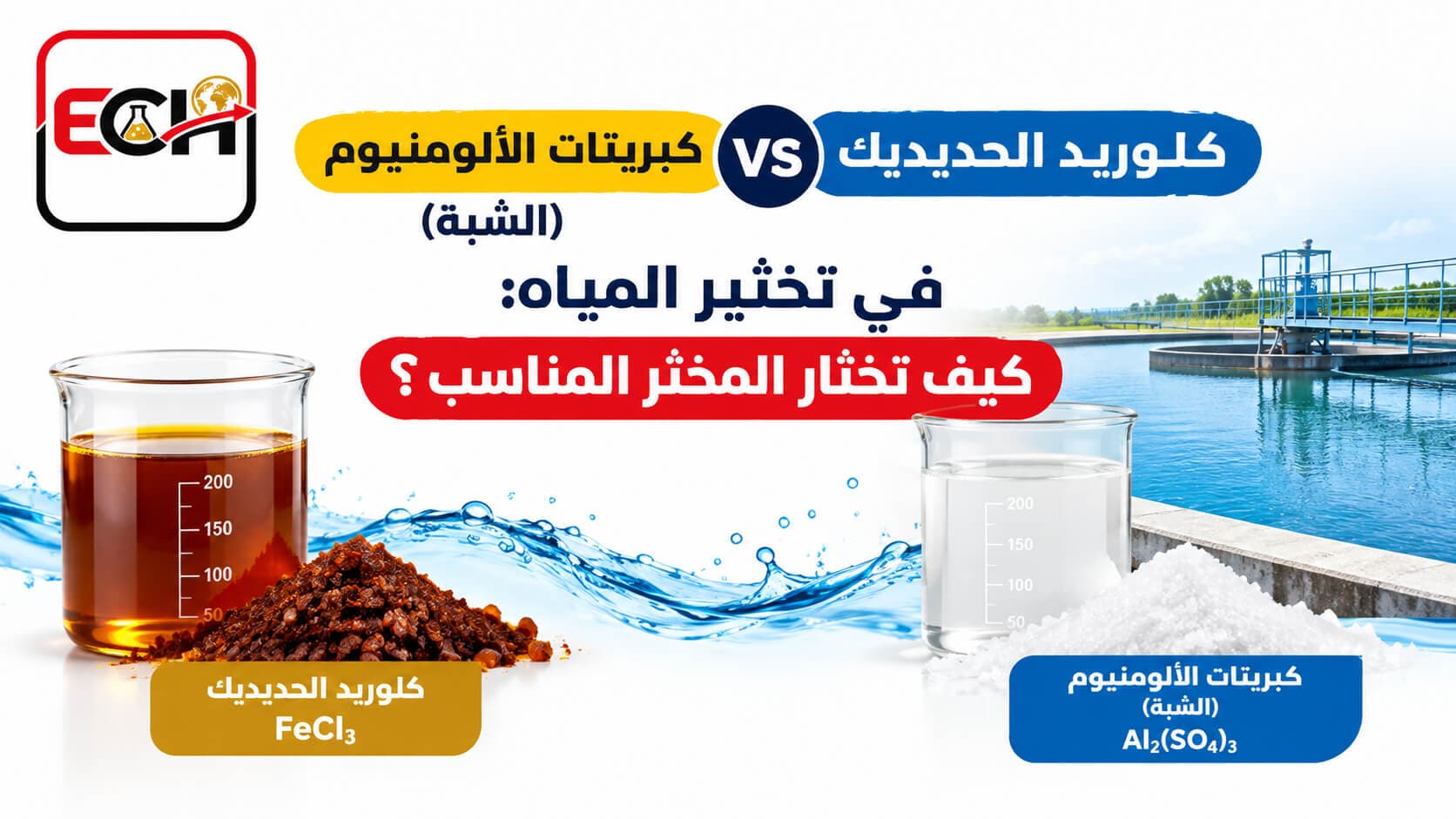
Many water treatment plant operators and procurement engineers ask: Should we use iron(III) chloride (scientifically known as ferric chloride) or polyaluminum chloride (PAC or PACl)? Both are among the most commonly used inorganic coagulants, and each has its distinct strengths. There is no single "best" coagulant for all waters, but understanding the differences helps narrow down the options before testing and ensures accurate purchasing specifications.
What is polyaluminum chloride (PAC)?
Polyaluminum chloride is not a simple salt like alum, but rather a partially pre-hydrolyzed aluminum chloride. This means that some of the chloride ions are replaced by hydroxyl groups during manufacturing, resulting in polynuclear aluminum compounds. Its general formula is Aln(OH)mCl(3n-m).
Basicity is the most important characteristic that distinguishes PAC grades. It expresses the ratio of hydroxyl groups to aluminum and is calculated as follows: Basicity (%) = (OH/Al) ÷ 3 × 100. The higher the basicity, the greater the proportion of polymer species in the product.
What does "PAC 18%" mean? It's a common trade name for a liquid PAC solution. Manufacturers' information leaflets state that its aluminum oxide (Al2O3) content is around 17%, ranging from approximately 16.5% to 18% depending on the manufacturer, which is about 9% aluminum. Its alkalinity is typically between 35% and 45%. Less concentrated solutions and solid (powdered) grades with higher Al2O3 content are also available. Therefore, always ask for the Al2O3 percentage and alkalinity on the certificate of analysis, and don't rely solely on the trade name.
Standard specifications: In Europe, the EN 17034:2018 standard covers polyaluminum chloride used in drinking water treatment, and it replaced the older EN 883 standard. iron(III) chloride is covered by the EN 888 standard, the latest version of which was issued in 2023.
What about a 40% iron(III) chloride solution?
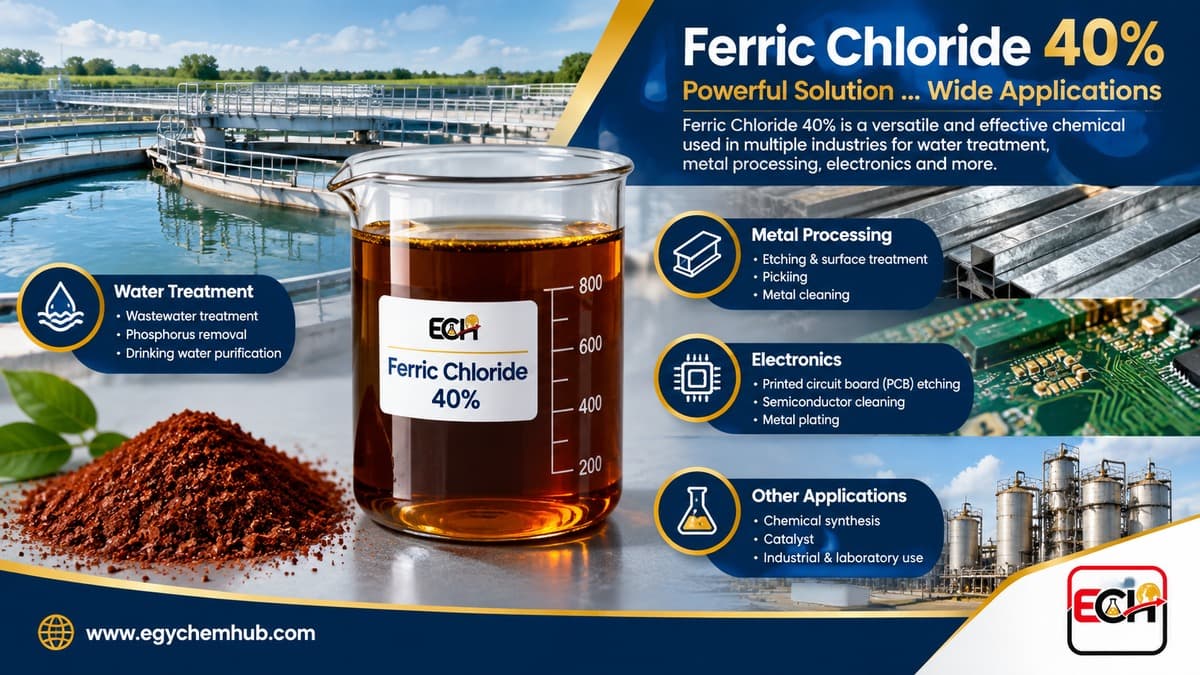
The formula FeCl3 refers to the anhydrous compound. The product used in power plants is a highly acidic, reddish-brown aqueous solution. For example, the technical data sheet for 40% iron(III) chloride solution (Ferric Chloride Solution 40%) from Egy Chem Hub states that its iron content is 13–14%, and its specific gravity is 1.42 at 20 °C, which is approximately 568 g of iron(III) chloride per liter.
When added to water, the iron salt decomposes and forms insoluble iron(III) hydroxide. This precipitate neutralizes the charges of suspended particles and traps them in a flake. Almost the same thing happens with aluminum in PAC. The difference is that some of this decomposition in PAC has already occurred at the plant, which explains most of the following differences.
Key differences in the table
| Standard | 40% iron(III) chloride solution | Polyaluminum chloride (PAC 18%) |
|---|---|---|
| Active mineral | Iron | Aluminum (approximately 17% as Al2O3) |
| PH range | Very wide, from about 4–5 to 11 | Narrower than iron, and wider than alum |
| Alkaline consumption | High (approximately 0.92 mg/L as CaCO3 per 1 mg/L FeCl3) | Low, and less than alum because it is pre-treated. |
| Cold water | Tested at the lowest seasonal temperature | Less sensitive to cold than alum |
| Sulfide precipitation and odor control | Yes, it forms insoluble iron sulfide. | It is not one of his known functions |
| Phosphorus removal | Yes | Yes |
| Residual metal in drinking water | Iron: The reference limit is aesthetic (color and taste), not healthy. | Aluminum: Monitored according to operational levels recommended by the WHO |
| Erosion | Highly corrosive to most metals | It is corrosive to most materials and requires acid and chloride resistant materials. |
PH and alkalinity
Herein lies the first practical difference. iron(III) chloride operates over a much wider pH range than aluminum coagulants. This is a real advantage in waters with fluctuating pH, and in industrial wastewater that may arrive at the plant acidic or alkaline.
In contrast, iron(III) chloride consumes more water alkalinity than alum. PAC consumes less than alum because some of the acidity is neutralized during manufacturing. As a result, PAC lowers the pH less and often requires less lime or soda for correction.
What does this mean for the buyer? In low-alkali water, PAC may save on the cost of the adjusting agent. However, in sufficiently alkaline water, or where pH reduction is already required, the effect of this difference diminishes, and the broader spectrum of action iron(III) chloride becomes apparent.
Heat and cold water
Several studies agree that PAC is less affected by temperature drops than alum. In experiments on river and lake waters at approximately 5–12 °C, the PAC flake maintained its size and sedimentation, and the residual aluminum was less than that of alum. This is attributed to the pre-formed polymer species in PAC.
However, a direct comparison between iron(III) chloride and PAC in cold water yielded no consistent results in the literature we reviewed. Therefore, we recommend conducting the comparison test at the lowest expected raw water temperature of the year, not just during the summer.
Flocculation, sedimentation, and sludge
Iron flakes are typically large and settle quickly, which is advantageous in conventional settling basins. PAC, on the other hand, forms a relatively cohesive flake and often requires a lower dose of alum to achieve the same result.
In both cases, the sludge is a mineral hydroxide added to the plant's sludge. Its quantity and dehydration capacity depend on the dosage and type of water, therefore it is measured on the same test samples rather than relying on a general rule.
Residual metal in drinking water
In drinking water, every coagulant leaves a trace of its mineral if the process is not controlled:
- Aluminum: The World Health Organization (WHO) does not establish a health guideline for aluminum, but it specifies achievable practical levels that can be reached by controlling the coagulation: 0.1 mg/L or less in large plants, and 0.2 mg/L or less in small plants. Studies indicate that PAC leaves less residual aluminum than alum.
- Iron: There is no health guideline value for it, and the common reference value of 0.3 mg/L is an aesthetic value related to taste and coloring of laundry and sanitary ware.
In other words, iron(III) chloride does not add aluminum to the treated water, a consideration for some operators. In both cases, precise dosage control, pH adjustment, and filtration remain the key to keeping residual metal levels low.
Areas where iron(III) chloride excels in wastewater
Herein lies the clearest added value of iron(III) chloride; it does not only act as a coagulant:
- Sulfide and Odor Control: Iron salts precipitate soluble sulfide as insoluble iron sulfide. Therefore, they are used in drainage systems, pumping lines, and within treatment plants to reduce hydrogen sulfide (H2S) emissions and odor. They are also used to reduce H2S in biogas produced from anaerobic sludge digesters. This property is specific to iron, and aluminum coagulants are not mentioned among the sulfide precipitators in the literature we reviewed.
- Phosphorus removal: Both iron and aluminum salts are used in the chemical removal of phosphorus; this is a shared field. We discussed this in detail in a previous article on phosphorus removal using iron(III) chloride.
- Oil separation: The technical data sheet for the Egy Chem Hub product mentions its use in oil removal in dissolved air flotation (DAF) units in refineries, and in water injection systems in oil fields.
In plants with odor problems or where phosphorus reduction is needed, iron(III) chloride can perform multiple functions with a single substance. However, it should be noted that additional dosage increases sludge volume, and the substance consumes alkali.
Corrosion, handling and storage
Both products are acidic and corrosive, and it is incorrect to assume that either is "safe" to handle:
- Iron(III) chloride solution at a concentration of 40% is highly corrosive to most metals, and its pH is less than 1. Our product's Safety Data Sheet (SDS) classifies it under H290, H302, H314 and H318. It is used with tanks and lines made of fiberglass (FRP), polyethylene, polypropylene, PVC, or rubber-lined steel.
- PAC is also corrosive to most materials and requires acid and chloride-resistant materials, such as fiberglass-reinforced plastics, rubber-lined steel, and PVC, while avoiding brass and mild steel connections. PAC solutions have limited stability during long-term storage, especially highly alkaline grades.
Practical point: If the plant is equipped for one product, switching to another requires reviewing the tanks, pumps, injection lines, and the addition point. We have addressed the rules for storing and handling iron(III) chloride in a separate article.
When does the choice lean towards each of them?
The choice tends towards PAC most often when:
- The alkalinity of the raw water is low and the pH should not be lowered too much.
- The water is cold most of the year, and the alum suffered in it.
- The station is originally equipped for aluminum coagulants.
It tends to form iron(III) chloride most often when:
- The pH of the raw water fluctuates or goes outside the range of aluminum coagulants.
- In addition to coagulation, what is required is the control of sulfides and odors or the reduction of H2S in biogas.
- It is preferable that the coagulant does not add aluminum to the treated water.
- The water must be sufficiently alkaline, and corrosion-resistant handling materials are available.
The jar test is the deciding factor
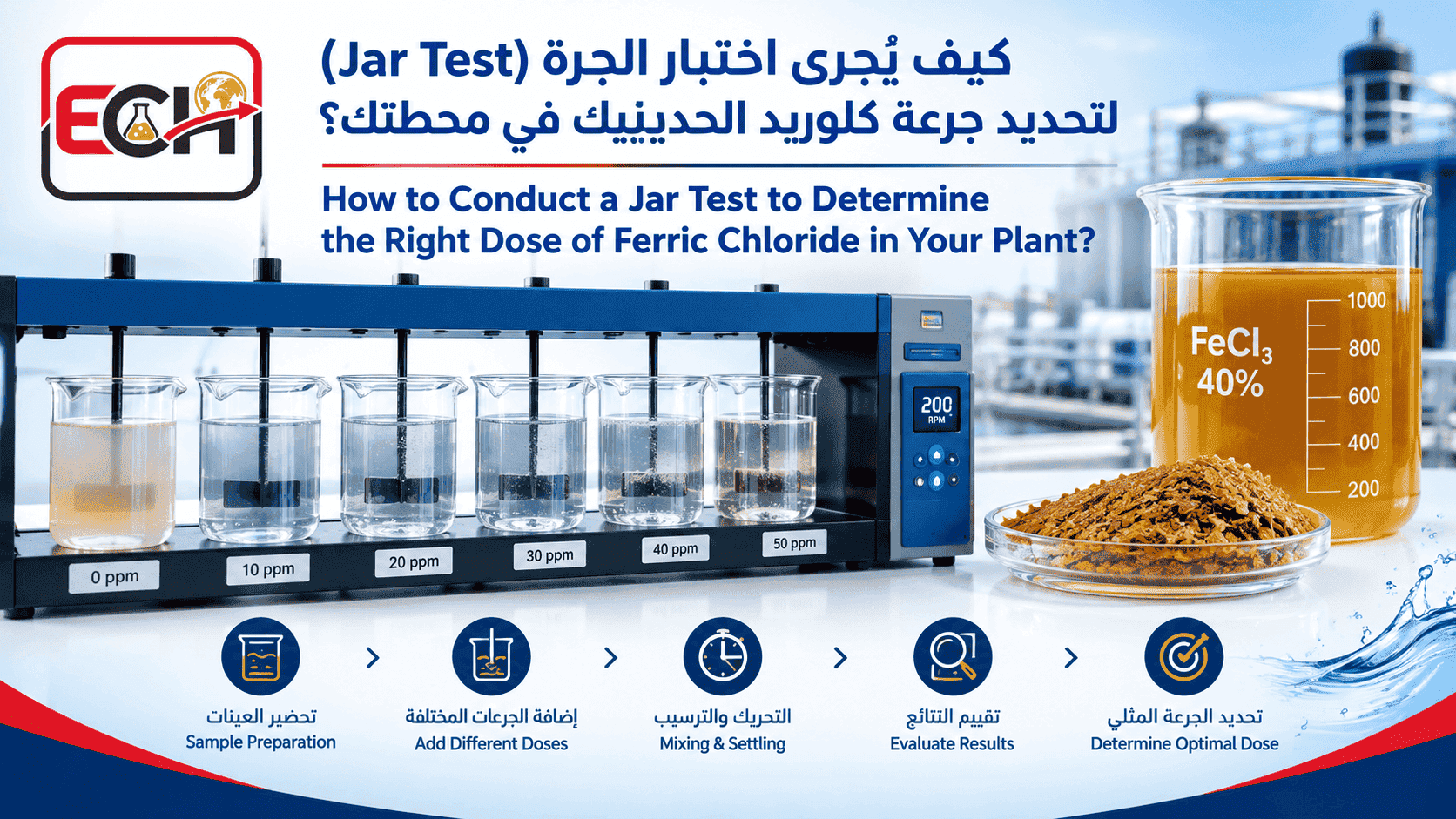
The previous rules prioritize but do not determine the final decision. The definitive answer lies in the Jar Test on actual water, comparing the two products on a single basis. The PAC dosage is typically stated as a product with a specific Al2O3 concentration, and the iron dosage may be stated as a solution, anhydrous, or iron. The test evaluates: residual turbidity, pH and alkalinity after coagulation, sludge volume, residual metal, and the total cost per cubic meter of treated material, not just the price per ton.
Iron(III) chloride solution 40% from Egy Chem Hub
Egy Chem Hub offers 40% iron(III) chloride solution (Ferric Chloride Solution 40%, trade name ECH-FR4014), manufactured in Egypt. According to the technical data sheet: concentration up to 40% (±2%) by weight, iron 13–14%, ferrous iron (Fe2+) 1% maximum, and free acidity 1% maximum. It can be injected undiluted or after dilution, with the optimal dosage determined by a jar test.
This product is manufactured in an NSF International-listed facility according to NSF/ANSI/CAN 60 (Drinking Water Treatment Materials), for coagulation and flocculation applications, with a maximum application concentration of 100 mg/L. It is packaged in 280 kg HDPE drums and 1,400 kg IBC tanks, and is also available in bulk. Technical Data Sheets (TDS) and Safety Data Sheets (SDS) are available upon request. Please note that Egy Chem Hub does not supply polyaluminum chloride; this comparison is provided to help you make the right choice.
To request a price quote or technical specifications, contact the Egy Chem Hub team, and attach your water analysis and application.
Frequently Asked Questions
What does “PAC 18%” mean?
It is a trade name for a liquid polyaluminum chloride solution, with an aluminum oxide (Al2O3) content of approximately 17%, ranging from 16.5% to 18% depending on the manufacturer. Always verify the Al2O3 percentage and alkalinity in the certificate of analysis.
Can PAC be directly replaced with iron(III) chloride at the same dosage?
No. The metal is different, the concentration is different, and the alkali consumption is different. Therefore, the new dosage is determined by jar testing, and the tank materials and injection lines are checked before conversion.
Which is more suitable for drinking water?
Both are used in drinking water according to their respective European standards (EN 888 for iron(III) chloride, and EN 17034 for PAC). PAC is used in cold, low-alkali water, while iron(III) chloride is used in water with fluctuating pH and where it is preferable not to add aluminum to the water. The final decision rests with the jar test.
Why is iron(III) chloride preferred in odorous wastewater treatment plants?
Because iron precipitates soluble sulfide in the form of insoluble iron sulfide, it reduces the emission of hydrogen sulfide and at the same time contributes to coagulation and phosphorus removal.