Iron(III) Chloride vs. Aluminum Sulfate (Alum) in Water Coagulation: How Do You Choose the Right Coagulant?
By فريق Egy Chem Hub
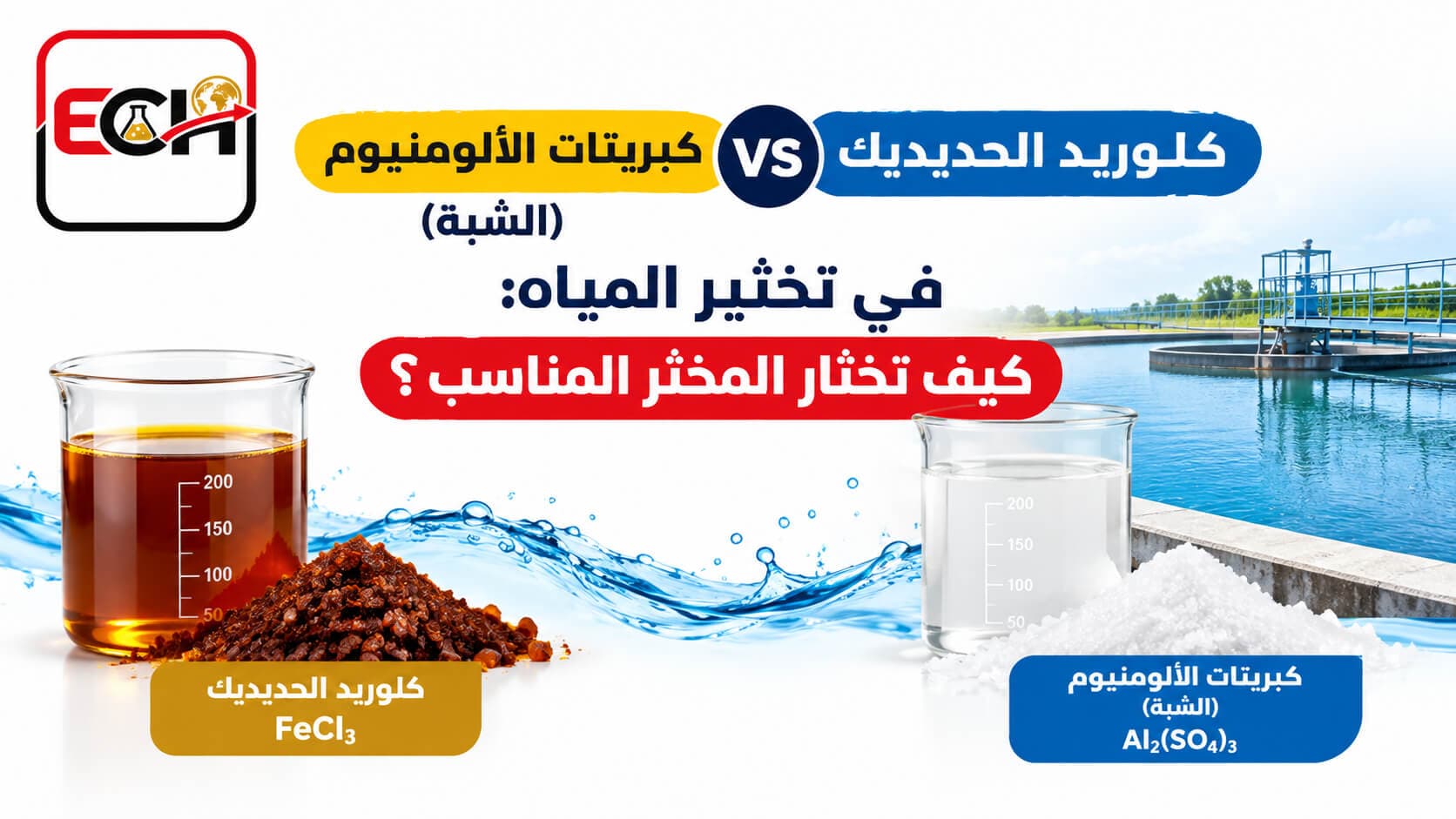
When selecting a coagulant for a water or wastewater treatment plant, the same question arises: Should we use iron(III) chloride (scientifically known as ferric chloride) or aluminum sulfate (alum)? There is no single answer that applies to all water. However, understanding the chemical and operational differences between the two substances saves time before beginning field tests and helps the buyer specify the requirements to be requested from the supplier.
What Are the Two Substances?
Aluminum sulfate (Al₂(SO₄)₃) is typically supplied in the form of hydrated crystals or a concentrated liquid solution.
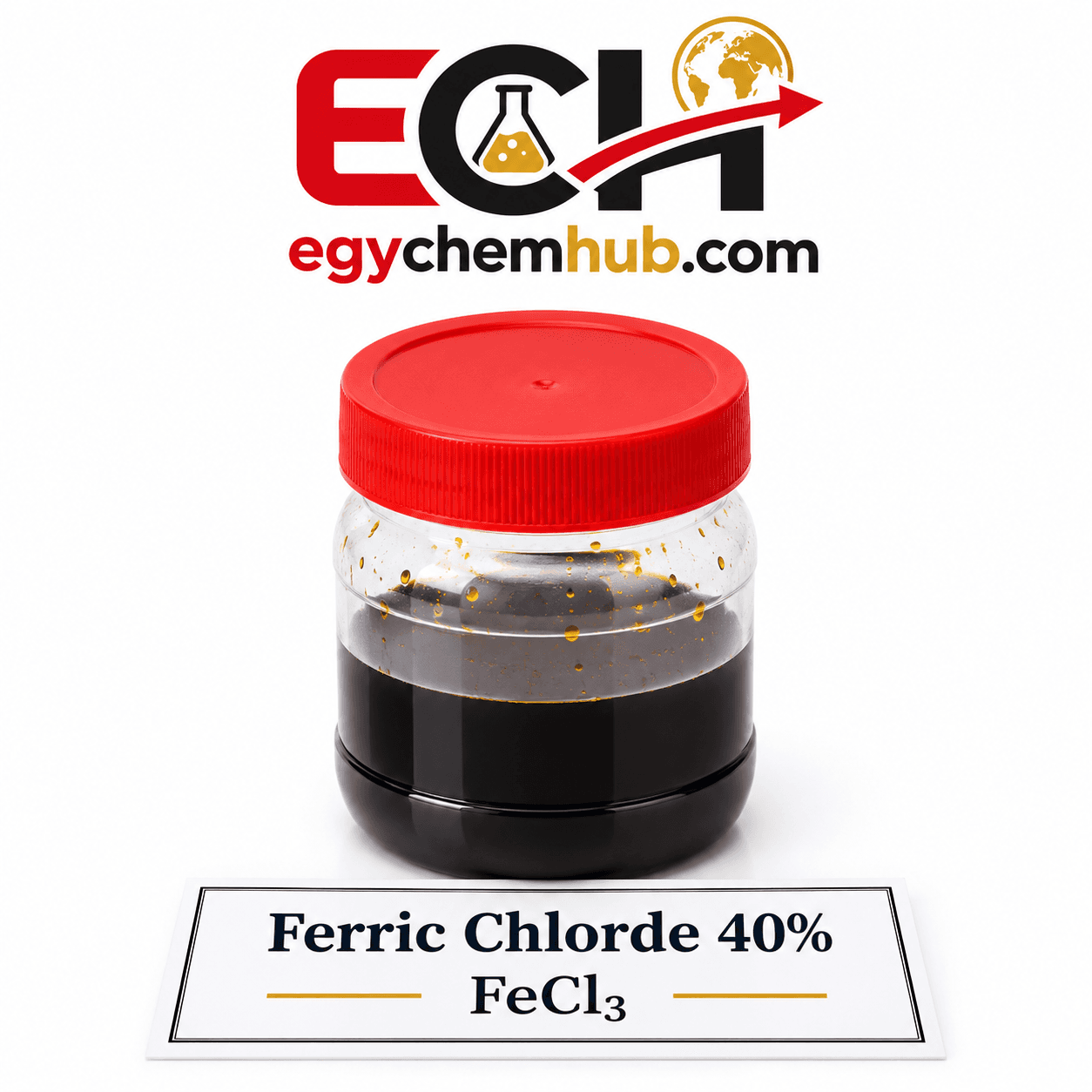
Iron(III) chloride (the formula FeCl₃ refers to the anhydrous compound) is used in water treatment, typically in the form of an aqueous solution with a concentration of approximately 41% by weight; it is a dark brown, highly acidic solution.
Both substances are inorganic coagulants derived from metal salts, and both are added to water in doses measured in milligrams per liter.
How do they work?
Upon addition, the metal salt dissociates in water and forms a sparingly soluble hydroxide: aluminum hydroxide Al(OH)₃ in the case of alum, and iron(III) hydroxide Fe(OH)₃ in the case of ferric chloride. This precipitate neutralizes the charges of the suspended particles and traps them in a “floc” that settles or is filtered out. Hydrolysis produces acidity that lowers the pH of the water and depletes its natural alkalinity; this is where the most significant differences between the two substances begin.
Key Differences in a Table
| Criterion | Aluminum sulfate (alum) | Iron(III) chloride |
|---|---|---|
| Effective pH range | Narrower, lying approximately between 5.5 and 7.5 (references vary slightly at the extremes) | Much wider, from approximately 4 to 11 |
| Alkalinity consumption (as CaCO₃) | About 0.45 to 0.50 mg/L per 1 mg/L of alum | About 0.92 mg/L per 1 mg/L of FeCl₃ (calculated as the anhydrous compound) |
| Ion added to water | Sulfate | Chloride |
| Resulting sludge | Aluminum hydroxide | Iron(III) hydroxide |
| Corrosion and handling | Acidic solution requiring appropriate storage materials | Highly corrosive to most metals |
Important note when comparing figures: The dose of alum may be expressed as a solid substance or a solution of a specific concentration, and iron(III) chloride may be expressed as an anhydrous or crystalline substance or as a solution. Therefore, always standardize the comparison on a single basis before calculating costs.
pH: Where Does Each Coagulant Work Best?
Alum’s effective range is narrower, extending from weakly acidic to around neutral. Therefore, a treatment plant relying on it must monitor the pH after addition and adjust it if it deviates from this range.
Iron(III) chloride, on the other hand, remains effective across a much wider range, which is an advantage when the pH of the raw water fluctuates or when operation outside the alum range is required. However, this wider range does not mean that the optimal dosage is fixed; it varies depending on the type of water.
Alkalinity: The Hidden Cost
Every metal coagulant consumes water alkalinity. Iron(III) chloride consumes nearly twice as much alkalinity as alum does for the same mass of active ingredient. In water that is already low in alkalinity, this may cause the pH to drop below the required range, necessitating the addition of lime or sodium carbonate to restore alkalinity—which adds to the cost of materials. Therefore, the alkalinity of the raw water is assessed before choosing between the two coagulants, not after.
Sludge and Floc
Both coagulants leave behind an insoluble hydroxide precipitate that becomes part of the sludge; therefore, the cost of treating and disposing of the sludge is included in the comparison. Iron flocs are large and settle quickly.
As for which one produces sludge that is easier to dewater, the references we have consulted do not agree on a single answer. Therefore, we do not provide a general rule here; it is best to measure the sludge’s dewaterability on samples from the same batch.
Corrosion and Handling
This is a difference that becomes apparent at the plant site rather than in the laboratory. Iron(III) chloride solution is acidic and highly corrosive to most metals. Non-metallic or lined materials such as fiberglass-reinforced plastic (FRP), high-density polyethylene (HDPE), polypropylene, and PVC, or rubber-lined steel, while ensuring compliance with the material manufacturer’s operating temperature specifications. This means inspecting injection lines, pumps, and tanks before switching to iron(III) chloride. Liquid alum is also acidic; therefore, check the compatibility of handling materials with the Safety Data Sheet (SDS) in both cases.
When is each typically preferred?
The following guidelines are not a substitute for testing, but they help establish priorities:
- Alum tends to be the most suitable when the pH of the raw water is close to its optimal range and alkalinity is sufficient.
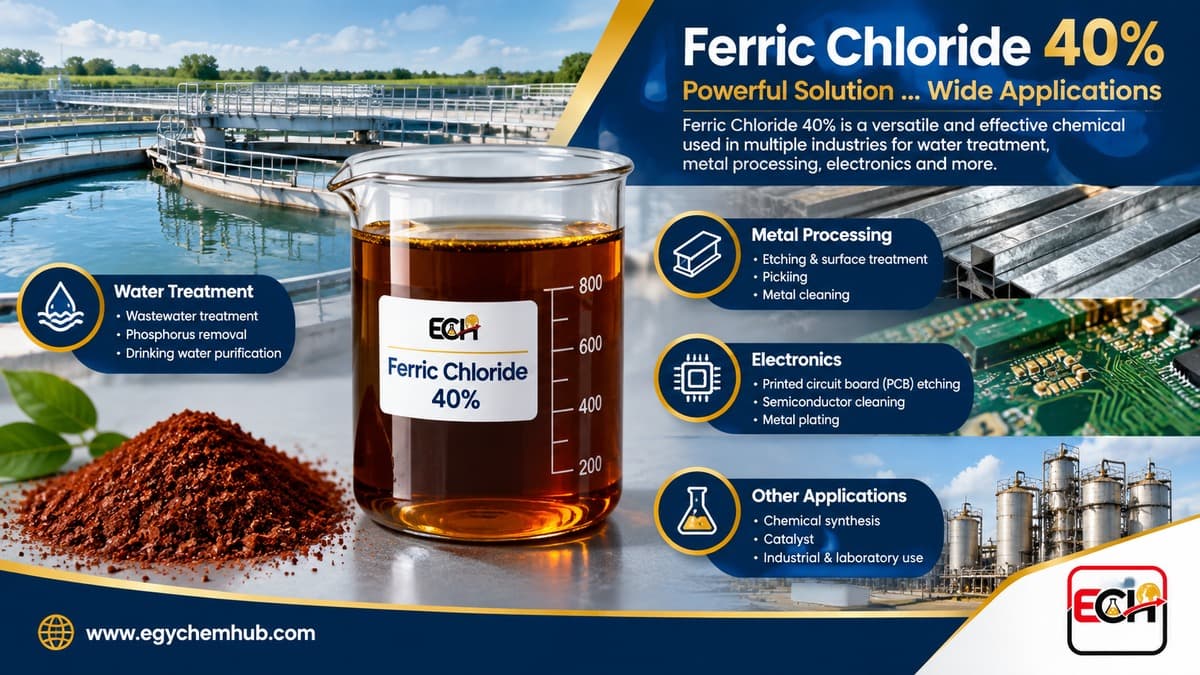
- Iron(III) chloride tends to be more suitable when the pH fluctuates or falls outside the range suitable for alum, or when the plant can absorb the cost of additional alkalinity and has corrosion-resistant process equipment. Its well-known applications in wastewater treatment include the removal of suspended solids and phosphorus.
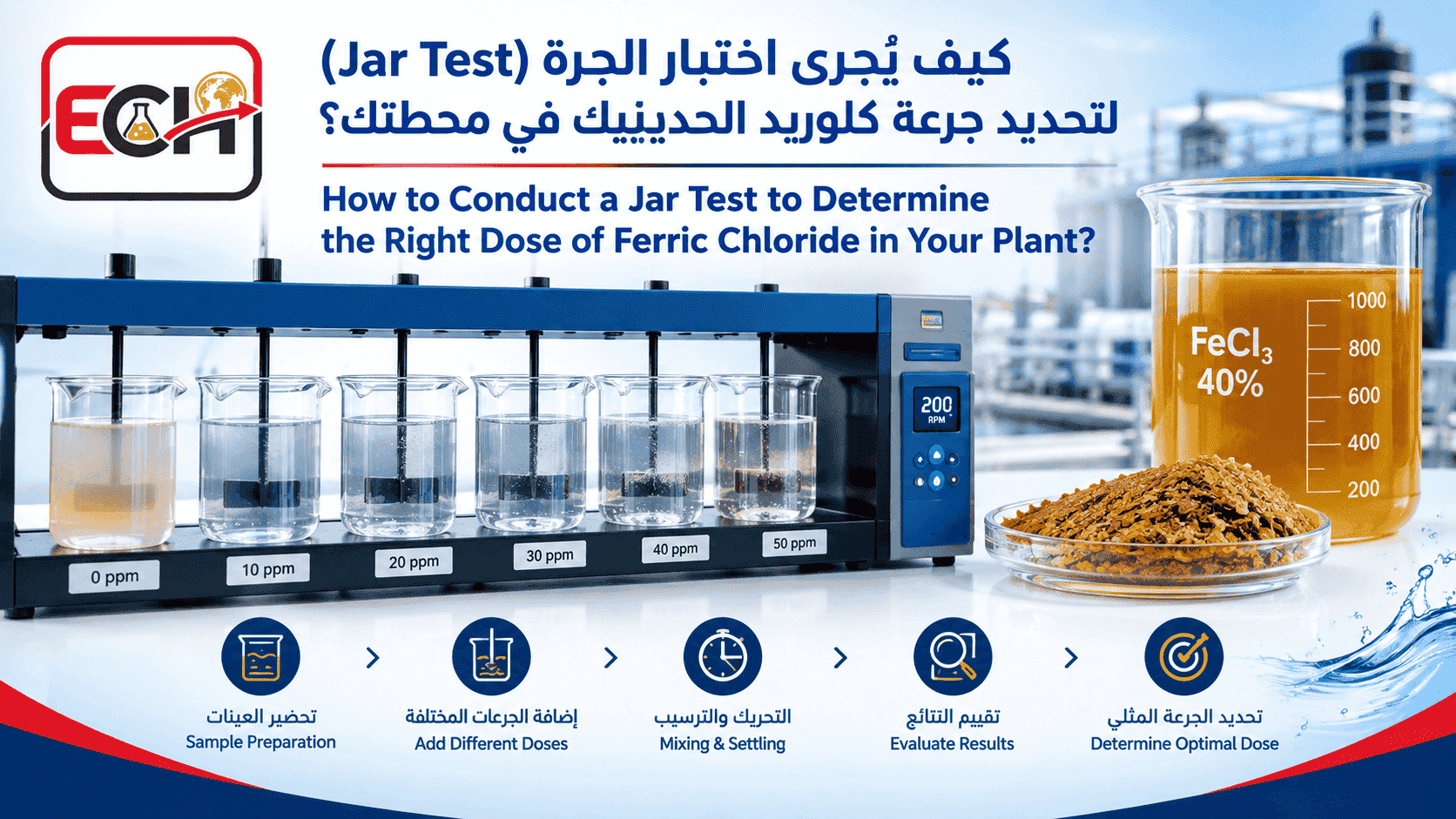
- In both cases, the feasibility of the choice is determined by a jar test conducted on the actual water sample.
Dosage: There is no universal figure
The optimal dosage depends on the turbidity of the raw water, its natural organic content, temperature, and alkalinity. Published dosages vary widely from one water source to another; therefore, we do not list a recommended dosage here. The jar test compares coagulants on a level playing field and determines the dosage, the optimal pH, and the amount of alkalinity compensation required.
Buyer’s Checklist
- Request a raw water analysis: pH, alkalinity, turbidity, and organic matter.
- Determine the product concentration and the basis for dose calculation (solution, anhydrous, or hydrate).
- Review the materials of the tanks, pumps, and injection lines.
- Estimate the cost of alkalinity compensation and sludge disposal, not just the price per metric ton.
- Request the Safety Data Sheet (SDS) and technical specifications prior to delivery.
40% Ferric Chloride Solution from Egy Chem Hub
Egy Chem Hub offers a 40% ferric chloride solution (Ferric Chloride Solution 40%, trade name ECH-FR4014), a reddish-brown, highly acidic aqueous solution and an inorganic coagulant classified within the water treatment family. It is available in industrial, technical, and water treatment grades and is packaged in 1,400-kg IBC tanks and 280-kg HDPE drums, It is also available in bulk. It is manufactured in Egypt and has a shelf life of 12 months. Store in a cool, dry, well-ventilated place in its original packaging, away from metals, alkalis, and reducing agents. The product is manufactured at an NSF-listed facility in accordance with NSF/ANSI/CAN 60 for drinking water treatment. ISO 9001:2015 and ISO 14001:2015 and ISO 45001:2018 certifications and REACH registration are displayed on the product page; Technical Data Sheets (TDS) and Safety Data Sheets (SDS) are available upon request. For industrial and environmental properties and applications, see our previous article on 40% iron(III) chloride.
Contact Us
To request a quote or technical specifications for 40% iron(III) chloride solution, contact the Egy Chem Hub team and provide details about your water and application so we can help you select the appropriate product and packaging.