Safe Storage and Handling of Iron(III) Chloride Solution: Tank Materials, Leaks, and First Aid
By فريق Egy Chem Hub
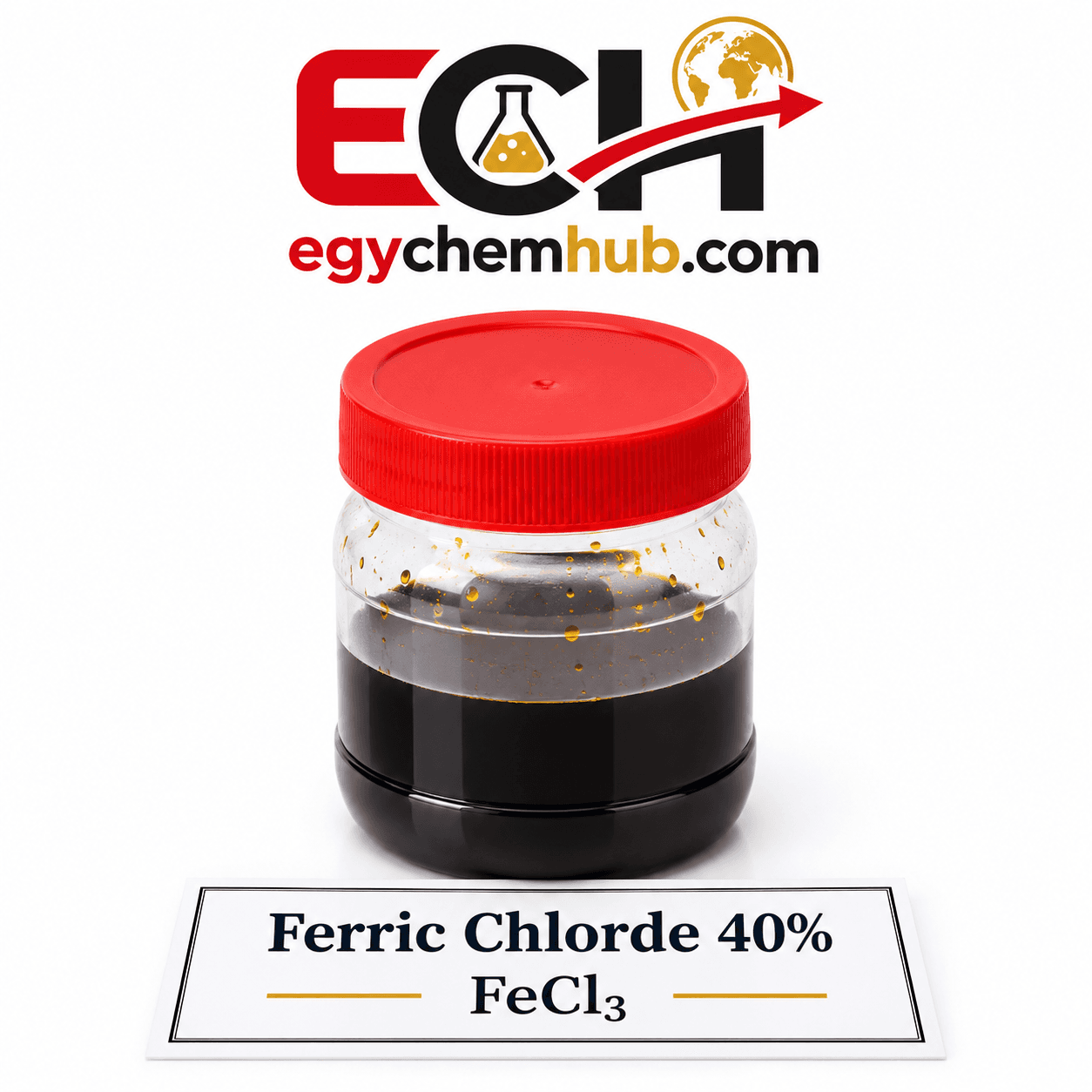
Iron(III) chloride (scientifically known as ferric chloride) is used in water treatment and in certain industrial applications, and it often arrives at the plant in the form of an aqueous solution. What is meant here is a 40% ferric chloride solution (Ferric Chloride Solution 40%); The formula FeCl₃ refers to the anhydrous compound, whereas the product is a reddish-brown, highly acidic aqueous solution (pH less than 1, according to the Safety Data Sheet).
This article summarizes what safety officers, operators, and purchasers need to know regarding the storage, transportation, and handling of incidents involving the solution. It supplements the Safety Data Sheet (SDS) but does not replace it.
Product Data Relevant to Handling
According to the Technical Data Sheet (TDS) and Safety Data Sheet (SDS) for product ECH-FR4014:
- Density: 1.42 (±0.02) at 20 °C.
- Completely soluble in water, with a concentration of up to 40% (±2%) by weight.
- Packaging: 280 kg HDPE drums, 1,400 kg IBC containers, and bulk supply.
- Shelf life: 12 months.
- Storage class: 8B (non-flammable corrosive substances).
Major Hazards
The signal word on the safety data sheet is “Danger,” and the classification according to the CLP Regulation is as follows:
| Symbol | Text as stated in the SDS | Practical Meaning |
|---|---|---|
| H290 | May be corrosive to metals. | Corrodes most metals and may generate hydrogen upon contact with some |
| H302 | Harmful if swallowed. | Harmful if swallowed |
| H314 | Causes severe skin burns and eye damage. | Causes severe skin burns and eye damage |
| H318 | Causes serious eye damage. | May cause serious eye damage |
The sheet specifies precautionary statements, including: P234 (Keep only in the original container), P260 (Do not breathe mist, vapors, or spray), P264 (Wash hands thoroughly after handling), P280 (Wear gloves, protective clothing, and eye and face protection), P304+P340 (If inhaled: Move the affected person to fresh air and keep them in a position comfortable for breathing), P405 (Store under lock and key), P406 (Store in a corrosion-resistant container with a resistant inner lining), and P501 (Dispose of contents and container in accordance with local regulations). It also includes other response phrases for ingestion, skin contact, and eye contact.
Two important warnings:
- The sheet warns that contact with reactive metals, such as aluminum, lead, and zinc, may generate large amounts of hydrogen, posing an explosion hazard. Therefore, smoking is prohibited, and ignition sources must be kept away from storage and unloading areas.
- Always check the classification on the safety data sheet accompanying the received shipment.
Personal Protective Equipment
Since the solution is classified as corrosive to the skin (H314), protective equipment is mandatory for anyone handling it:
- Hands: Appropriate gloves. The safety data sheets list natural rubber, chloroprene (neoprene), nitrile, butyl, and PVC. Check the glove manufacturer’s permeation data.
- Eyes and face: Safety goggles or a face shield.
- Body: A chemical-resistant apron and long boots.
- Respiratory protection: In case of high concentrations or the formation of mist, a respirator with a composite filter.
- Hygiene: Wash hands before breaks and at the end of the work shift; do not eat, drink, or smoke at the work site; and wash contaminated clothing before reusing it.
- Provide adequate washing facilities near work areas.
Ventilation and Avoiding Aerosols
The technical bulletin recommends keeping containers tightly closed, avoiding the formation of aerosols, and providing adequate ventilation with local exhaust at critical points such as filling and emptying openings. Only adults (18 years of age or older) who have been trained on the hazards of the product should handle it, according to the safety data sheet.
Tank and Pipe Materials
Basic rule: No metals at any point of contact with the solution. Please confirm the final selection with the tank manufacturer based on concentration and temperature.
| Condition | Materials |
|---|---|
| Materials Typically Used | Polyethylene (including HDPE), polypropylene, PVC, fiberglass-reinforced plastic (FRP), rubber-lined steel, and PTFE and PVDF linings |
| Materials to Avoid | Carbon steel, stainless steel, aluminum, lead, zinc, and most metals in general |
The same rule applies to pumps, valves, gaskets, and hoses; their compatibility with the solution must be confirmed with the supplier prior to installation. Some supplier tables indicate that certain grades of stainless steel may withstand specific conditions; however, a government reference on water treatment describes it as susceptible to corrosion, so it should only be used with written approval from the supplier.
Both the safety data sheet and the technical data sheet stipulate that the product must be stored only in its original container. When transferring the product to a bulk tank, the materials of the tank and fittings become the responsibility of the site; therefore, their compatibility must be verified before the first transfer.
Incompatible Materials and Separation
According to the safety data sheet and technical data sheet, the solution must not be stored with:
- Metals (see hydrogen hazard above).
- Alkalis, as the solution reacts with them.
- Reducing agents.
Keep storage areas for the solution away from these materials; do not share sinks or drain lines with them, and do not allow any of them to mix with the solution in the event of a leak.
Storage Conditions and Secondary Containment
- A cool, dry, well-ventilated area; containers must be tightly sealed.
- Store under lock and key in accordance with P405, and in a corrosion-resistant container with a resistant inner lining in accordance with P406.
- An acid-resistant secondary containment basin (Bund) is recommended to prevent any leaks from reaching drains or water sources. The basin’s capacity must be determined in accordance with local regulations for the country and site.
- The shelf life, according to the product data sheet, is 12 months; therefore, the “first-in, first-out” (FIFO) rule applies, and receipt dates must be recorded.
Cold Temperatures and Crystallization
Concentrated iron(III) chloride solutions may crystallize when the temperature drops, and some safety data sheets advise avoiding extremely high or low temperatures during storage. Therefore, measures to protect tanks and pipes from freezing in winter should be considered.
There is no documented, universally agreed-upon crystallization temperature applicable to all 40% solutions; as the values published in suppliers’ safety data sheets vary depending on the composition. Therefore, the supplier must be asked for the crystallization temperature specific to the shipment before designing insulation or heating measures; a general figure should not be relied upon.
Leak: What to Do
- Evacuate unauthorized personnel, activate ventilation, and put on protective equipment before approaching. Be aware that the contaminated floor is extremely slippery.
- Shut off the source if possible without risk, and remove ignition sources.
- Contain the liquid with dikes or barriers to prevent it from spreading over a wide area; do not discharge it into drains or waterways.
- Absorb the liquid with sand, diatomaceous earth, or an acid-binding agent, then collect the contaminated material in suitable containers and dispose of it as hazardous waste in accordance with regulations.
- Notify the appropriate authorities if the spill reaches water, soil, or a drainage system.
- Do not flush the solution with water into drains, and clean the area after removing the material according to the site plan.
In case of fire: The solution is non-flammable, but heating may release hydrogen chloride gas. Water is suitable for extinguishing a nearby fire, but avoid a strong water jet.
First Aid
Follow the safety data sheet, and seek medical attention after any skin or eye contact, ingestion, or inhalation of the substance, as the solution is classified as causing severe skin burns:
- Eyes: Rinse immediately with plenty of water; remove contact lenses if they can be done so easily; continue rinsing without stopping until medical help arrives; then have the affected person seen by a doctor.
- Skin: Immediately remove contaminated clothing and wash the skin with plenty of water or under a shower. Seek medical attention, as contact may cause severe burns.
- Inhalation: Move the affected person to fresh air and keep them in a position that allows for easy breathing; seek medical attention immediately if breathing is difficult.
- Ingestion: Rinse the mouth thoroughly with water; have the person drink water in small sips (to dilute the substance); do not induce vomiting; and seek medical attention immediately. Do not give anything by mouth to an unconscious person.
- First Aider: Protect yourself first. The emergency number is listed in Section 1 of the safety data sheet.
Transportation Classification
According to the product’s safety data sheet and the ADR/RID, IMDG, ICAO-TI, and IATA-DGR transportation regulations:
| Item | Value |
|---|---|
| UN Number | UN 2582 |
| Proper Shipping Name | Ferric chloride, solution |
| Hazard Class | 8 (Corrosives), Classification Code C1 |
| Packing Group | III |
| Marine Pollutant | No |
The shipment must be accompanied by a safety data sheet, and the containers must bear the appropriate labels for Class 8. The carrier should review local regulations prior to loading.
Quick Pre-Purchase Checklist
- Request the latest SDS and TDS and compare them with your site’s requirements.
- Identify the material of the tank, pipes, and gaskets, and confirm them with the manufacturer.
- Set up a containment basin, appropriate barriers and absorbents, and eye and skin wash stations.
- Request the specific crystallization grade for your shipment before winter.
- Train employees on unloading, spill response, and first aid.
To request a quote or technical specifications, contact the Egy Chem Hub team.